
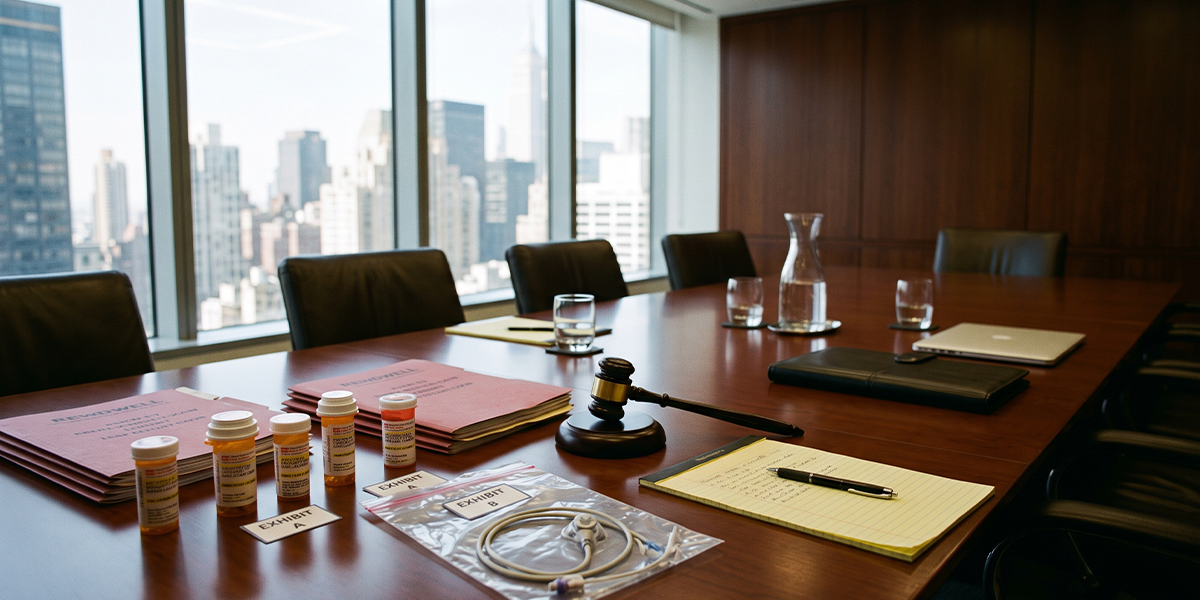
A pharmaceutical or medical device lawsuit is a type of product liability claim alleging that a prescription drug, over-the-counter medication, or medical device caused injury because it was defectively designed, improperly manufactured, or lacked adequate safety warnings. These cases seek to hold manufacturers accountable when their alleged negligence or defective product results in serious harm.
Whether someone has a viable claim depends on the facts of their case, including the product involved, the nature of the alleged defect, and the injuries suffered. These claims affect patients throughout New York City, from Manhattan and Staten Island to Brooklyn, Queens, and The Bronx, as well as the surrounding New York area.
What this guide covers
- How the FDA Regulates Drugs and Devices
- Common Types of Pharmaceutical Negligence in New York
- Common Pharmaceutical Drug Claims
- Common Medical Device Injury Claims
- What to Do If You Believe a Drug or Device Caused Your Injury
- Why Choose Grandelli & Eskenasi
- Frequently Asked Questions About Pharmaceutical and Medical Device Lawsuits
How the FDA Regulates Drugs and Devices
The FDA (Food and Drug Administration) is vital in reviewing and monitoring prescription drugs and medical devices before and after they reach the market. While FDA approval requires manufacturers to demonstrate that a product meets certain safety and effectiveness standards, approval does not prevent injuries from occurring or eliminate a manufacturer's responsibility to warn about known risks.
In pharmaceutical and medical device lawsuits, injured patients often allege that manufacturers failed to adequately test their products, disclose safety concerns, provide proper warnings, or take appropriate action after learning about potential risks.
Common Types of Pharmaceutical Negligence in New York
Testing and Approval Failures
Drug manufacturers are responsible for testing and providing accurate safety information before approving medications. Claims may arise when companies fail to adequately study potential risks or minimize known dangers during the approval process.
Manufacturing and Distribution Defects
Medication must be manufactured and distributed according to strict safety standards. Contamination, incorrect dosages, and other manufacturing defects can contribute to patient harm.
Failure to Disclose Side Effects
Drug manufacturers have a responsibility to provide accurate information about known risks and potential side effects. When patients and healthcare providers are not properly informed, they may unknowingly face serious complications.
Inadequate Labels and Warnings
Clear warnings allow doctors and patients to make informed decisions about whether the benefits of a medication outweigh its risks. Lawsuits may arise when a manufacturer fails to update labels or provide sufficient warnings about serious side effects associated with medication.
Dangerous Off-Label Marketing
Although doctors may prescribe medications for uses not specifically approved by the FDA, manufacturers can face liability if they promote drugs for unapproved uses or encourage prescribing without providing appropriate safety information. Opioid litigation is one example where allegations have involved misleading marketing practices and inadequate warnings about addiction and overdose risks.
Prescription Errors
Some medication-related injuries involve errors by healthcare providers, pharmacists, or other parties involved in prescribing and dispensing drugs. These claims may involve incorrect dosages, dangerous drug interactions, or prescribing medications without properly considering a patient's medical history.
Common Pharmaceutical Drug Claims
Tepezza
Lawsuits involving Tepezza have alleged hearing loss and tinnitus, alleging the drug's labeling failed to adequately warn about the risk of permanent auditory injuries.
Ozempic / Wegovy
Ozempic and Wegovy are approved for type 2 diabetes but widely used off-label for weight loss. Lawsuits have alleged serious gastrointestinal injuries and vision loss reported by patients, which were not adequately disclosed on the drug label.
Eye Care Products
Claims involving recalled eye care products have alleged contamination leading to serious eye infections, vision loss, and other eye injuries.
Depo-Provera
Lawsuits involving Depo-Provera have alleged a link between long-term use and meningioma (brain tumors), along with claims that these risks were not adequately disclosed.
Ocaliva
Claims involving Ocaliva have alleged serious liver injuries, including liver failure, and inadequate warnings regarding these risks.
Veozah
Claims involving Veozah have focused on allegations of liver injury and whether patients were adequately warned about potential risks.
Common Medical Device Injury Claims
IVC Filters
IVC filter lawsuits have alleged that certain devices may fracture, migrate, or perforate surrounding organs, potentially causing serious complications such as internal injuries, blood vessel damage, and the need for additional procedures.
Philips CPAP Devices
Claims involving recalled Philips CPAP and BiPAP devices have alleged that degrading foam inside certain machines could expose users to harmful particles and chemicals, potentially resulting in respiratory problems, inflammation, and other health complications.
Bard PowerPort
Bard PowerPort lawsuits have alleged device failures, including catheter fractures, migration, infections, blood clots, and other complications that may require additional medical treatment or corrective procedures.
Exactech Joint Implants
Claims involving Exactech joint implants have alleged premature device failure, excessive wear, component loosening, and the need for revision surgeries following hip, knee, or ankle replacement procedures.
Transvaginal Mesh
Transvaginal mesh lawsuits have alleged complications including mesh erosion, organ perforation, infection, chronic pain, bleeding, and the need for additional corrective surgeries.
FDA approval does not prevent injuries from occurring or eliminate a manufacturer's responsibility to warn about known risks.
What to Do If You Believe a Drug or Device Caused Your Injury
Seek medical attention and follow your healthcare provider's recommendations.
Preserve the product: Avoid discarding the product or related materials that may be important evidence.
Document everything: Keep records of your diagnosis, treatment, prescriptions, and related expenses.
Save packaging and labels: Save the drug packaging, labels, device information, receipts, or any documentation identifying the product.
Report adverse events: Report any side effects or adverse events to your healthcare provider.
Consult an attorney: Speak with an experienced product liability attorney to understand your rights and legal options.
Why Choose Grandelli & Eskenasi
At Grandelli & Eskenasi, we understand the complex legal and medical issues involved in pharmaceutical and medical device injury claims. These cases often require a detailed review of medical records, product information, regulatory history, and the circumstances surrounding a patient's injury. Our attorneys are committed to helping injured individuals and their families understand their legal options and pursue the compensation they may be entitled to recover. Since 1992, our firm has represented injured New Yorkers from our offices in Manhattan, Staten Island and Brooklyn, serving clients throughout all five boroughs of New York City.
If you or a loved one has been injured by a prescription drug, over-the-counter medication, or medical device, contact Grandelli & Eskenasi today for a free consultation to discuss your legal rights and options. Consultations are available at our Manhattan, Staten Island and Brooklyn offices.
Frequently Asked Questions About Pharmaceutical and Medical Device Lawsuits
What is a pharmaceutical or medical device lawsuit?
It is a product liability claim alleging that a prescription drug, over-the-counter medication, or medical device caused injury because it was defectively designed, improperly manufactured, or lacked adequate safety warnings. These cases seek to hold manufacturers accountable when a defective product results in serious harm.
Can I sue a drug manufacturer if the FDA approved the medication?
FDA approval does not eliminate a manufacturer's responsibility to warn about known risks. Injured patients often allege that manufacturers failed to adequately test their products, disclose safety concerns, provide proper warnings, or take appropriate action after learning about potential risks, even for approved products.
Which drugs are currently involved in pharmaceutical lawsuits?
Current pharmaceutical claims include Tepezza (hearing loss and tinnitus), Ozempic and Wegovy (gastrointestinal injuries and vision loss), recalled eye care products (contamination and eye infections), Depo-Provera (meningioma brain tumors), Ocaliva (liver injuries), and Veozah (liver injury). Each involves allegations that risks were not adequately disclosed or warned about.
Which medical devices are currently involved in injury lawsuits?
Current medical device claims include IVC filters (fracture, migration, and organ perforation), recalled Philips CPAP and BiPAP devices (degrading foam and respiratory problems), Bard PowerPort (catheter fractures and infections), Exactech joint implants (premature failure and revision surgeries), and transvaginal mesh (erosion, organ perforation, and chronic pain).
What should I do if I believe a drug or medical device injured me?
Seek medical attention and follow your provider's recommendations, avoid discarding the product or related materials, keep records of your diagnosis and treatment, save all packaging and documentation identifying the product, report adverse events to your healthcare provider, and speak with an experienced product liability attorney about your rights and legal options.
If you or a loved one has been harmed by a dangerous drug or defective medical device, our product liability attorneys are ready to help you understand your legal options.