
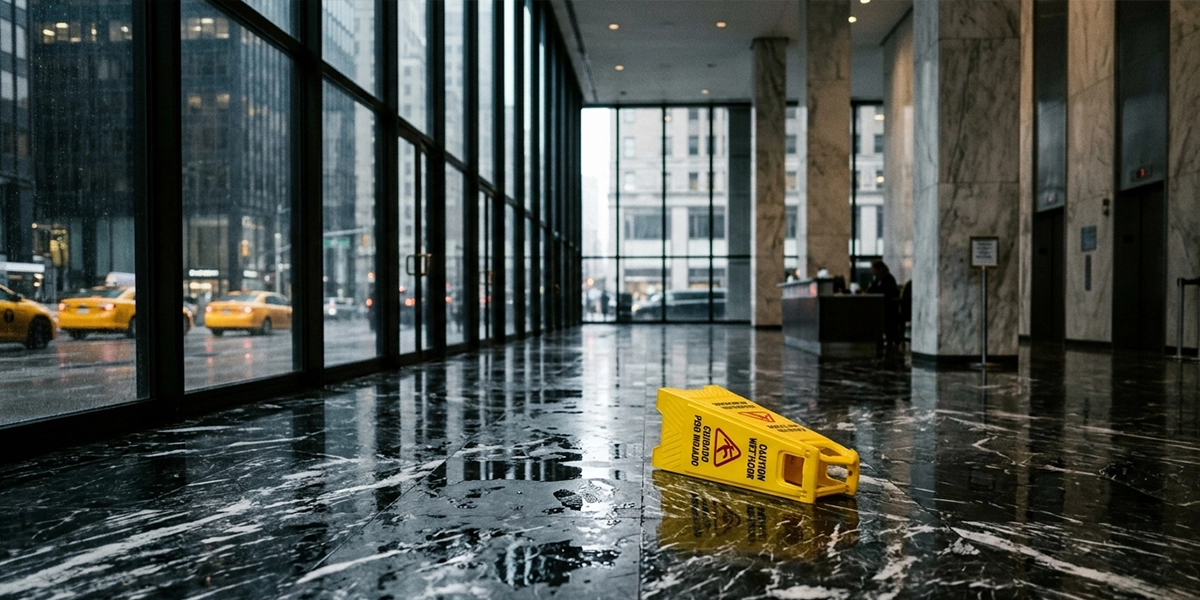
Slip-and-fall accidents happen quickly but can have long-lasting consequences: physical injuries and pain, medical bills and lost wages. If you were injured on someone else's property in New York, understanding how premises liability works and the steps to take afterward improves your chances of a successful claim.
Who Can Be Held Liable for a Slip and Fall in NY?
- Property owners and occupiers (landlords, tenants, stores, employers) owe a duty to keep the premises reasonably safe for lawful visitors.
- Businesses and commercial property owners face higher expectations to identify and fix hazards promptly.
- Municipalities and public entities: different rules apply (notice requirements, immunities). Sidewalk and public-space rules vary by city and county.
Common Causes of Slip and Fall Accidents
- Wet or slippery floors (mopped floors, spills)
- Uneven or broken flooring, loose tiles, missing handrails, unsecured mats, torn carpeting
- Poor lighting and obstructed walkways
- Snow and ice on sidewalks or entrances
- Unmarked steps, thresholds, or sudden grade changes
Legal Elements of a Personal Injury Claim: What You Must Prove
To recover you generally must prove:
- The defendant owned or controlled the property;
- The defendant created, knew of, or should have discovered the dangerous condition;
- The defendant failed to fix or warn about the condition within a reasonable time; and
- The dangerous condition caused your injury and damages.
The Statute of Limitations for Slip and Fall Lawsuits in New York
For most personal injury claims (including slip-and-fall) in New York State, you have 3 years from the date of the accident to file a lawsuit (CPLR 214). Different time limits and notice requirements may apply for claims against municipalities or public entities-often much shorter-and for certain landlord/tenant disputes.
Types of Damages You Can Recover After a Fall
- Pain and suffering
- Medical expenses (past and future)
- Lost wages and diminished earning capacity
- Loss of enjoyment of life or permanent impairment
Crucial Steps to Take Immediately After a Slip and Fall
- Get medical attention immediately; document injuries and treatment.
- Report the incident to the property owner, manager, or employer and request an incident/accident report; keep a copy.
- Preserve evidence: photos of the hazard, lighting, weather, and the exact location; save clothing and shoes.
- Get contact information for witnesses and collect their statements if possible.
- Preserve surveillance evidence-request it quickly; footage is often erased.
- Keep records of all bills, time off work, and communications about the accident.
When to Consult a New York Premises Liability Attorney
- Serious injuries (fractures, head or spinal injuries, surgery required)
- Disputed fault or complex liability issues (municipal defendants, snow/ice disputes)
- Evidence preservation concerns (missing surveillance, delayed reporting)
- Unsatisfactory settlement offers
A New York premises liability lawyer can evaluate liability, preserve evidence, calculate damages, and handle negotiations or litigation.
If you've been injured, getting timely legal advice helps protect your rights and meet procedural requirements.